
This is the second of two articles examining the ongoing shortage of workers in the construction industry and the efforts underway to address it. The first article in this series is Rebuilding the Construction Workforce.
Construction labor shortages have prompted builders to rethink not only how they recruit workers, but also how they construct buildings. As discussed in the first article in this series, workforce development remains critical, yet many contractors are also adopting alternative construction methods that can improve efficiency and reduce reliance on onsite labor.
One response has been the increased use of modular and factory-built construction. By moving portions of the building process into controlled manufacturing environments, builders can reduce weather-related delays, improve quality control, and make more efficient use of labor resources. Readers interested in learning more about factory-built housing can visit e2Value’s CrossMod: Manufactured Homes with a Difference.
Commercial construction has adopted similar strategies through prototype and prefabricated building methods. Prototype designs allow developers to replicate successful building plans across multiple projects, reducing design time and improving consistency. Prefabrication takes this concept further by manufacturing building components or assemblies offsite before transporting them for installation. e2Value previously explored these approaches in Higher Commercial Construction Costs Lead to Alternative Building Methods.
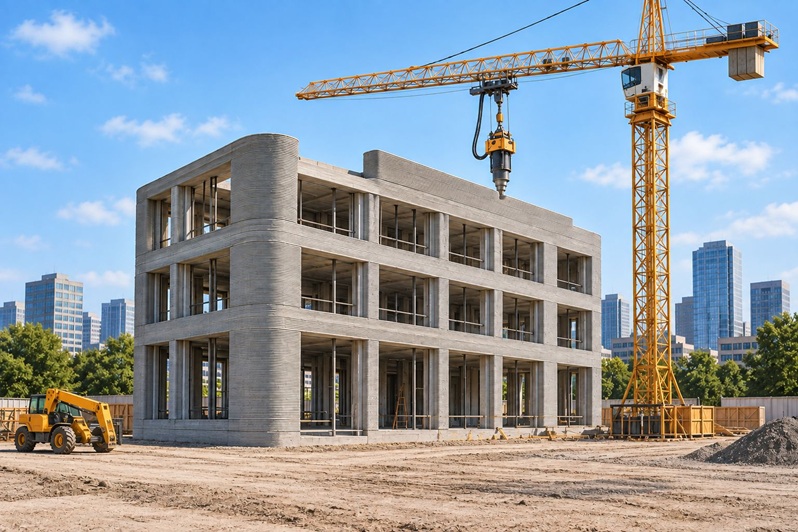
Emerging technologies are also expanding the possibilities for industrialized construction. One example is large-scale construction 3D printing, where automated systems create structural components through additive manufacturing techniques. Recent developments include tower crane-based 3D-printing systems designed to automate portions of the construction process and potentially reduce labor requirements for certain building activities.
Although these alternative methods are unlikely to eliminate the need for skilled tradespeople, they may help contractors complete projects more efficiently and reduce some of the productivity challenges associated with labor shortages. As workforce constraints persist, the industry’s response will likely involve a combination of recruiting and training new workers while also adopting modular construction, prefabrication, and emerging technologies that can improve productivity.
e2Value keeps up with changes in costs to provide fast, cost-effective and accurate replacement cost valuations. We work from the Florida Keys to the Arctic Circle, Newfoundland to Alaska. We value structures ranging from Park Model manufactured homes, regular manufactured homes, log cabins, cottages on a lake, suburban homes, the world’s most luxurious and famous homes, retail office space, barns, silos and even scales in a grain bin. Contact us for more information about our estimator tools.